
The Spanish Flu, which ran rampant for two year (1918-1919), infected a fifth of the world's population. Coming right after World War I, the two disseminated the world's population. The Spanish Flu, however, was more destructive killing 20 to 40 million people. It was most destructive to people between the ages of 20-40. 28% of Americans were affected, and it killed 675,000 Americans--and gave us one of the strangest characters in literature history, courtesy of Stephanie Meyers. The Spanish Flu was more destructive than the Black Plague, which had more than a two year run. A strange fact is that the American Service Men in Europe, at least half of them died of the flu and not an enemy attack. Little kids make up songs to go with every epidemic and the Spanish Flu was no different "I had a little bird, / Its name was Enza. / I opened the window, / And in-flu-enza." The spread happened through human routes, trade road and shipping lines. One things studies have found is that in more humid areas were more affected because it helped spread the bacteria like an incubator. For a little bit more information, you can visit this website--where I got all my information from: http://virus.stanford.edu/uda/
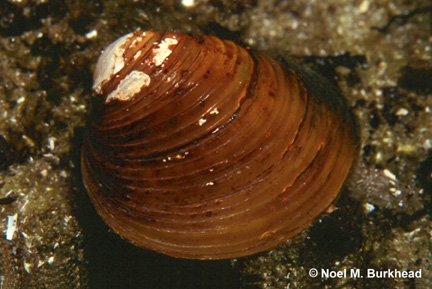
Asian clams are filter feeders that remove particles from the water column. They can be found at the sediment surface or slightly buried. The ability to reproduce rapidly coupled with low tolerance of cold temperatures can produce wild swings in population sizes from year to year in northern water bodies. The life span is about one to seven years. The Native Region for the clams is the temperate to tropical southern Asia west to the eastern Mediterranean; Africa, except in the Sahara desert; southeast Asian islands south into central and eastern Australia. You can find more information at http://nas.er.usgs.gov/queries/factsheet.aspx?speciesid=92

No comments:
Post a Comment